Twala Joins ANC's The Boardroom to Talk eNotarization and the Future of the Philippine Economy
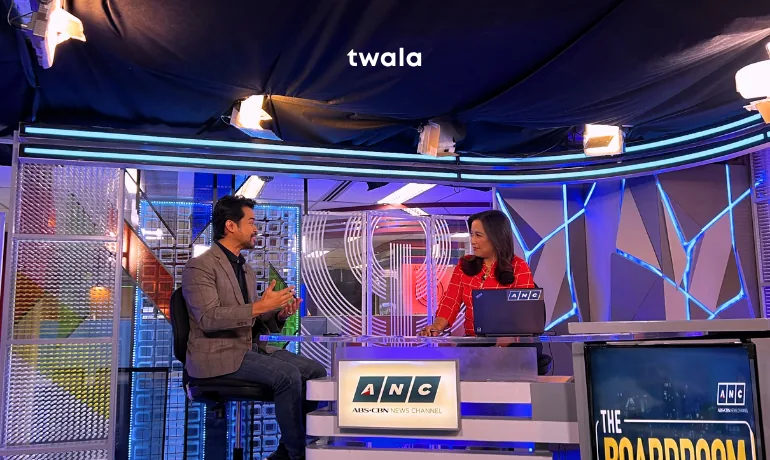
Twala stepped into the national conversation this week as Co-Founder and General Counsel Atty. Third Bagro sat down with Salve Ibañez on ANC's The Boardroom. The segment centered on a question with real economic weight: can digital notarization move the needle for a country still bound to paper, ink, and long lines at the notary's office? For Twala, a Philippine-built document intelligence platform combining artificial intelligence and blockchain technology, it was an opportunity to bring eNotarization out of the back office and into the national spotlight.
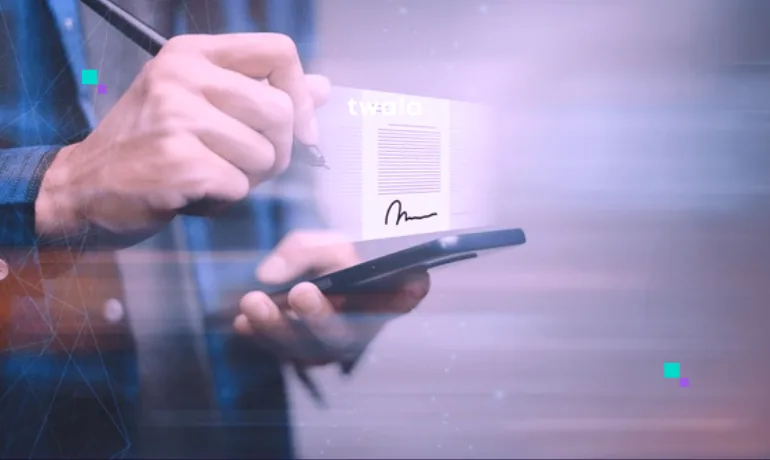
The Story Behind TwalaTwala was built around a simple observation: trust in a document should not depend on a physical stamp, a notary's calendar, or a filing cabinet. The platform layers tamper-proof digital signatures, electronic notary services, and automated document workflows on top of agentic AI, secured end-to-end by blockchain and public key infrastructure (PKI). The result is a document trail that is verifiable, auditable, and far harder to forge than its paper predecessor — without asking businesses or individuals to sacrifice the legal weight a notarized document is supposed to carry.
On The Boardroom, that origin story framed the bigger conversation: why a legal-tech platform believes it has a role to play not just in individual transactions, but in the trajectory of the Philippine economy as a whole.
The Case for eNotarizationNotarization is a quiet but persistent bottleneck in Philippine commerce. Contracts, affidavits, deeds of sale, and countless other instruments still require an in-person appearance before a notary public — a requirement that adds friction, cost, and delay to transactions that increasingly happen across cities, provinces, and time zones. For small and medium enterprises in particular, that friction compounds: every notarized document is a small tax on the speed of doing business.
eNotarization reframes that process. By digitizing the notarial act and anchoring it to blockchain-secured verification, a document's authenticity and chain of custody can be established in minutes rather than days — without diluting the legal protections notarization exists to provide. That is the throughline of the discussion on The Boardroom: digital notarization is not a workaround for legal formality, but a faster, more secure way of satisfying it.
What This Means for the PhilippinesThe Philippines has spent the past several years pushing toward a more digital economy — from e-governance initiatives to the broader push for paperless transactions across government and industry. Legal and document infrastructure is one of the less visible pieces of that shift, but arguably one of the most consequential: contracts and notarized instruments underpin lending, real estate, corporate formation, and dispute resolution across every sector.
Positioning Twala within that shift is what made the ANC appearance significant. It signals that the conversation around digital notarization is no longer confined to legal or fintech circles — it is becoming a mainstream economic story, one about how much faster, cheaper, and more secure doing business in the Philippines can become when trust infrastructure catches up to the pace of digital transactions.
Watch the Full InterviewThe full segment, "The Boardroom: Twala on whether digital notarization can accelerate the Philippine economy," is available on ANC 24/7's YouTube channel: