Twala’s Road to eNotarization: A Timeline From 2020 to 2026

Twala’s road to eNotarization began in July 2020, when its work with the Supreme Court on electronic notarization started, and it led to the country’s first two eNotarized documents on October 19, 2026.
Six years is a long time for a startup to spend on a rule that did not exist yet. These are the milestones along the way, from a digital signature company called TwalaSign to one of the first three Electronic Notarization Facilities (ENFs) accredited by the Supreme Court.
2020: A company named for trust
Twala was founded in 2020 as TwalaSign, a digital signature company built on blockchain and public key infrastructure (PKI). The name comes from tiwala, Filipino for trust. Its co-founders include its CEO, Engr. Jeffrey Reyes; its General Counsel, Atty. Herminio “Third” Bagro III; and its CTO, Alexander Paul Quinit.
The company started from a premise that has guided it since: digitalization stalls if the last step, the signed and notarized document, stays on paper. That July, Twala’s work with the Supreme Court on electronic notarization began. The Electronic Commerce Act of 2000 had long given the Court the option to adopt electronic notarization. What the country still lacked were the rules and the facilities to carry it out.
2022: Recognition, investment, and a government grant
In February 2022, Twala became the first-ever Grand Champion of the La French Tech Startup Competition, supported by the French Chamber of Commerce and Industry and the government of France. In June, IdeaSpace invested ₱1 million in the company.
In August came the milestone that mattered most for what followed: a ₱4.6 million grant from the Department of Science and Technology’s Philippine Council for Industry, Energy and Emerging Technology Research and Development (DOST-PCIEERD), through its Startup Grant Fund Program. It put public research funding behind Filipino-built signature and identity technology, the foundation of everything Twala has built since.
2023: Standards, research, and the cooperative sector
In March 2023, Twala joined the Cloud Signature Consortium, the global organization that develops standards for cloud-based digital signatures. It is still the consortium’s only Philippine member. Twala also entered a research and development partnership with DOST’s Advanced Science and Technology Institute (DOST-ASTI).
In August, the National Confederation of Cooperatives (NATCCO) signed a two-year contract with Twala to digitalize the cooperative sector. All the while, the Supreme Court kept consulting technology providers as it drafted the electronic notarization rules, and Twala was among them.
2024: Recognition for cutting red tape
In March 2024, Engr. Jeffrey Reyes was named to the Esquire Philippines 2024 Trailblazers List, and Twala made the Echelon Top 100 that year. In October, the Anti-Red Tape Authority (ARTA) named Twala an Ease of Doing Business Champion of 2024. Of the 21 awardees, Twala was the only one outside government.
2025: The rules arrive
In 2025, the Supreme Court approved the Rules on Electronic Notarization (A.M. No. 24-10-14-SC), together with guidelines for accrediting Electronic Notarization Facility providers, and the rules took effect in March. They allow in-person and remote electronic notarization, extend an Electronic Notary Public’s reach to the whole country, and set the safeguards every facility must meet, from identity verification and liveness detection to tamper-evident records.
That same year, Twala was named Tech Innovator of the Year at the KMC Startup Awards 2025.
2026: From partnership to accreditation
On January 12, 2026, Twala and the Integrated Bar of the Philippines (IBP) signed a national partnership at the IBP’s office in Ortigas, bringing training, webinars, and discounted packages to IBP members and support for the IBP’s Unified Legal Aid Service. In May, Twala, the Philippine Chamber of Commerce and Industry’s Quezon City chapter, and IBP Quezon City held a webinar for businesses on electronic signatures and notarization. A webinar with the Land Registration Authority on electronic notarization drew more than 800 attendees.
On August 5, the Supreme Court accredited Twala as an Electronic Notarization Facility, one of the first three. “This accreditation represents an important milestone not only for Twala, but for the broader digital transformation of legal services in the Philippines,” Reyes said at the time. Five days later, the Court opened its portal for lawyers applying to become Electronic Notaries Public, and applicants could complete the required training on an accredited facility through Twala Academy.
In late August, Twala briefed the Chamber of Real Estate and Builders’ Associations (CREBA) at its general membership meeting, and Atty. Bagro appeared on ANC’s The Boardroom to discuss what eNotarization could mean for the economy. On October 13, the Supreme Court signed joint memorandum circulars with the Land Registration Authority and the Securities and Exchange Commission on the use of eNotarized documents.
October 19, 2026: The first two eNotarized documents
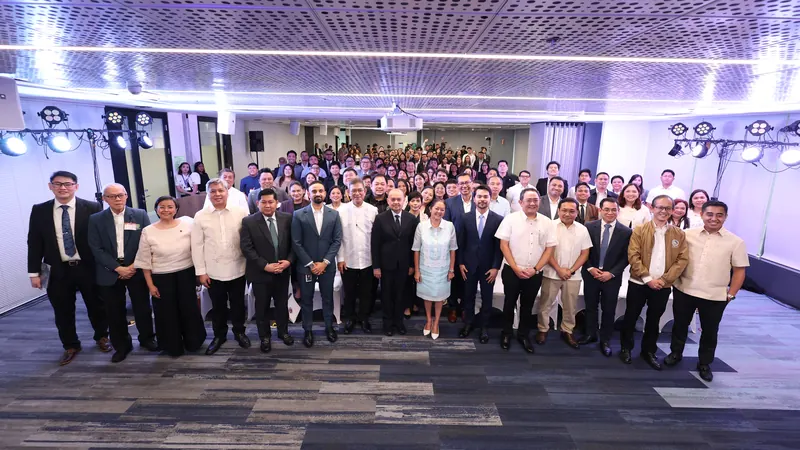
When electronic notarization officially launched on October 19, the first two documents eNotarized in the Philippines were agreements notarized on Twala: one with the IBP supporting free legal aid, and one with the UP College of Law on legal technology and AI. First Lady Louise Araneta-Marcos and Senior Associate Justice Marvic M.V.F. Leonen witnessed the signing. At the same event, Reyes announced that Twala will soon integrate with the eGov app.
Where that leaves Twala
Today Twala serves more than 1.3 million individual users and more than 600 companies, with AI document tools, eSignature, and eNotarization in one platform. The thread through all six years is the one in the company’s name, and Reyes puts it this way: “The Philippines deserves a digital future built on trust, not paperwork. That’s why we started Twala: to give every Filipino institution the tools to move at the speed of trust.”
More about the company is on our About page and in the press kit. For what the launch means in practice, read what changed on October 19, and for the partners behind the platform, who stands behind Twala.